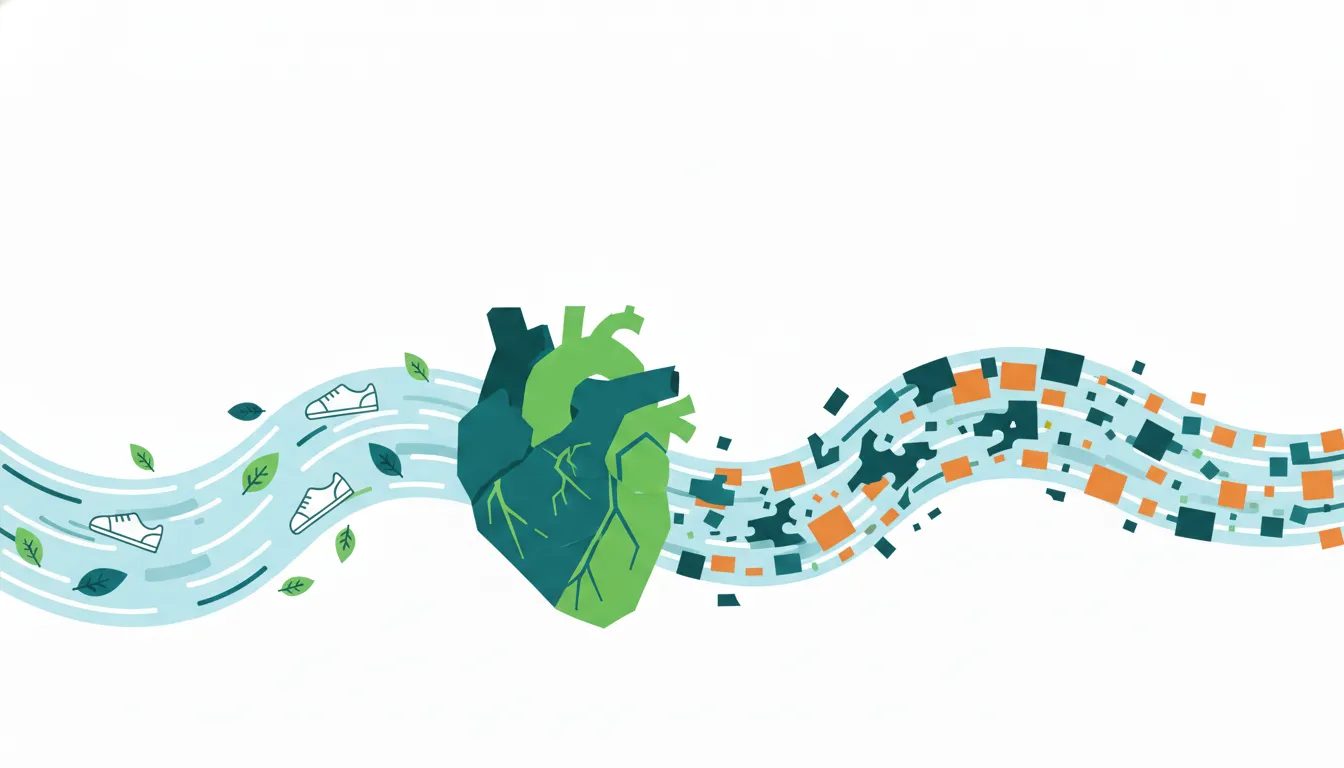
The human heart is often romanticized as the seat of emotion, but in purely mechanical terms, it is a pump. Like any pump, its longevity depends not just on the integrity of the hardware, but on the quality of the fluid it moves. For decades, cardiology focused heavily on the “pipes”—the arteries—and the cholesterol plaque that clogs them. However, a quieter, equally deadly dynamic has been gaining attention in medical research: the viscosity of the blood itself.
When blood becomes too thick—a state known as hypercoagulability—it transforms from a life-giving river into a sluggish sludge. This change forces the heart to work harder, scraping against the delicate lining of blood vessels and dramatically increasing the risk of catastrophic clots. This physiological state is not merely a matter of bad luck; it is the convergence of genetics, modern diet, chronic stress, and, perhaps most significantly, physical inactivity. Understanding how these factors intertwine offers a blueprint for not just treating heart disease, but preventing it entirely through a lifestyle that promotes “hemodynamic flow.”
The Silent Physics of the “Thick Blood” Phenomenon
To understand why thick blood is dangerous, one must look at the endothelium—the single layer of cells lining every blood vessel in the body. In a healthy system, blood flows with low resistance, creating a gentle “shear stress” that stimulates the endothelium to produce nitric oxide, a molecule that keeps vessels relaxed and dilated.
However, when blood viscosity rises—due to an excess of red blood cells, dehydration, or high levels of clotting proteins like fibrinogen—that flow becomes turbulent. This turbulence damages the endothelium, creating microscopic injuries. The body repairs these injuries with plaque and clots. It is a vicious cycle: thick blood damages the vessel, the vessel creates a rough surface to heal, and that rough surface encourages more clotting.
This “silent killer” often goes undetected in standard cholesterol screenings. A patient might have reasonable LDL levels but still suffer a heart attack because their blood prone to clotting under stress. This propensity can be driven by genetics, such as the Factor V Leiden mutation, which makes the blood resistant to the body’s natural anti-clotting mechanisms. For these individuals, the margin for error in lifestyle choices is significantly narrower.
The Cortisol Connection: Stress as a Coagulant
While genetics load the gun, environment often pulls the trigger. One of the most pervasive environmental toxins in the modern world is chronic stress. The physiological link between the brain and the blood is direct and evolutionary. In prehistoric times, stress usually meant physical danger—a predator or a rival. Anticipating a wound, the body evolved to flood the bloodstream with clotting factors and platelets under stress, preparing to seal potential injuries quickly.
Today, the “predator” is an overflowing inbox or financial anxiety, but the physiological response remains the same. Chronic stress keeps the body in a state of low-grade inflammation. It elevates levels of cortisol and epinephrine, which in turn increase the stickiness of platelets. Over time, this results in a permanently pro-thrombotic state. The blood is perpetually ready to clot for a wound that never comes, eventually forming a thrombus that can block a coronary artery or travel to the brain.
Culinary Hemodynamics: Eating for Flow
Counteracting this thickened state begins in the kitchen. The modern Western diet, high in processed sugars and trans fats, promotes inflammation, which increases fibrinogen levels. Conversely, a diet focused on flow acts as a natural anticoagulant.
The superstars of this approach are Omega-3 fatty acids, found in fatty fish like salmon and mackerel. These acids integrate into the cell membranes of platelets, making them less sticky and less likely to aggregate inappropriately. Beyond fats, the plant kingdom offers powerful rheological agents. Compounds found in garlic, ginger, and turmeric have been shown to inhibit platelet aggregation via mechanisms similar to aspirin, albeit more gently.
Hydration also plays a rudimentary but critical role. Blood is approximately 50% water. Even mild dehydration reduces blood volume, causing the remaining fluid to thicken—a phenomenon known as hemoconcentration. For the heart, pumping dehydrated blood is akin to sucking a milkshake through a narrow straw; the resistance is immense.
Motion as Medicine: The Shear Stress Solution
While diet provides the chemical substrate for healthy blood, physical activity provides the mechanical signal. Exercise is arguably the most potent natural “blood thinner” available, but the mechanism is often misunderstood. It is not just about burning calories; it is about “shear stress.”
When you engage in aerobic exercise—be it running, swimming, or brisk walking—the increased rate of blood flow exerts a beneficial physical force on the vessel walls. This force triggers the release of tissue plasminogen activator (t-PA), a protein that breaks down blood clots. Essentially, exercise enhances the body’s own fibrinolytic (clot-busting) system.
Sedentary behavior has the opposite effect. Long periods of sitting cause blood to pool in the legs, increasing viscosity locally and raising the risk of Deep Vein Thrombosis (DVT). The “optimal load” for heart health is not necessarily marathon training, which can sometimes induce temporary inflammation, but rather consistent, moderate-to-vigorous rhythmic activity. Studies suggest that 150 to 300 minutes of moderate aerobic activity per week is the sweet spot for optimizing blood rheology without inducing oxidative stress.
The Pharmacological Bridge
For some, lifestyle changes alone are insufficient. When the risk of stroke or embolism is high—such as in patients with Atrial Fibrillation (AFib)—pharmacology becomes a necessary bridge.
The landscape of anticoagulation has shifted dramatically. For decades, Warfarin (Coumadin) was the standard, a drug originally developed as rat poison that required meticulous dietary restriction and constant monitoring. Today, the era of Direct Oral Anticoagulants (DOACs) has revolutionized treatment. Drugs like apixaban and rivaroxaban target specific steps in the clotting cascade with greater precision and fewer lifestyle restrictions.
However, the existence of these drugs does not negate the need for lifestyle management. Medication prevents the clot, but diet and exercise preserve the vessel and the muscle. The future of cardiac care lies in a hybrid approach: using genetic data to predict clotting risk, using medication to manage acute danger, and using lifestyle architecture—nutrition, stress management, and movement—to build a cardiovascular system that flows freely.
The heart does not beat in isolation. It is part of a fluid dynamic system where physics, chemistry, and psychology collide. By respecting the river within, ensuring it runs clear and swift, we do more than just avoid disease; we sustain the very rhythm of life.
Sources and References
- American Heart Association (AHA): “Biophysical and Biochemical Roles of Shear Stress on Endothelium” AHA Journals
- Mayo Clinic: “Factor V Leiden: Symptoms and causes” Mayo Clinic
- National Institutes of Health (NIH): “Association between Blood Viscosity and Cardiovascular Risk Factors” PubMed Central
- Journal of Thrombosis and Haemostasis: “Effects of strenuous exercise on hemostasis and fibrinolysis” PubMed
- Harvard Health Publishing: “Foods that fight inflammation” Harvard Health